
Blog
Speaking Truth To Power - The Survivor Reference Group
A blog to mark the publication of the Survivor Reference Group Initial Report.
Last week we sat in a room in Glasgow and as sunshine poured in through the windows survivors delved into the details of where the justice system in Scotland had let them down. These conversations aren’t unusual for us at Rape Crisis Scotland – justice is one of our key priority areas – but what made this conversation out of the ordinary was that looking on and listening in were Justice Secretary Humza Yousaf and the Lord Advocate James Wolffe QC.
It was a meeting of power, though of very different kinds. Where the Justice Secretary and Lord Advocate have both a great deal of responsibility for justice in Scotland and power in terms of how this is – and is not – delivered, survivors were there to speak truth to it. In doing so with strength, courage and vulnerability, each of them showed the power of stories and of speaking out to effect change.
It can never be right that the process of seeking justice following sexual violence in Scotland is described by some as worse than the assault itself. We know that it is never going to be easy, but we also know it doesn’t have to be this hard.
Why we must reject anonymity for suspects in sexual offence cases
The demand for sexual offence suspects to be granted anonymity appears in the press and within public discourse with depressing regularity.
To support such a move is to prioritise the interests of a small group of men over those of one of the most vulnerable groups of all – rape complainers.
With statistics in Scotland for 2017/18 showing that
there were 2,255 rapes and attempted rapes reported to the police, but only 107
convictions, the last thing that is needed is something that
will make this worse – and proposing anonymity for those accused of rape is a
retrograde step which promises to do exactly that.
Reporting rape, and going through the criminal justice process, can be an
extremely difficult experience. Taking the decision to speak out about what has
happened, and to seek justice, is far from automatic. According
to the latest Scottish Crime & Justice Survey less than ¼ of people who had experienced it report their most recent rape as an adult. Fear of
being blamed, judged, disbelieved and of the
court process itself are among many barriers survivors face when they’re
considering reporting.
There is no reason why those accused of rape should
be singled out for anonymity – proposing that they should seems to suggest that
rape victims are more likely to be making false allegations than victims of
other crimes, which research tells us is not the
case. The
push to grant anonymity is also an attack on the credibility of rape
complainers – a contemporary spin on the damaging suggestion that women ‘cry
rape’ and are not to be trusted.
Trauma: everyone's business
As a country, Scotland is talking more and more about trauma
and that's
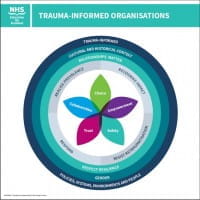 good news for all of us.
The ambition and commitment of the
Scottish Government to develop a trauma informed workforce makes it clear that trauma
is everyone’s business.
From hairdressers to health care professionals,
Sheriffs to shopkeepers, it doesn’t matter who you are or what you do, there’s
every chance that you will encounter someone who has experienced trauma. When –
not if - you do, being trauma informed means that you can make the world of
difference to that person, and together we can change Scotland for the better.
The Jamal decision: significant new appeal judgement on corroboration of penetration in rape cases
In the recent case of Jamal v HM Advocate [2019] HCJAC 22, the High Court decided that an allegation of sexual assault could corroborate an allegation of rape despite the fact that only the rape charge involved an allegation of penetration. This is an important decision which may reduce the extent to which the corroboration requirement is a barrier to bringing prosecutions for rape in some cases.
The Jamal decision
Jamal was convicted of three sexual offences: a sexual assault committed against one victim (“CQ”), and a rape and a sexual assault committed on different dates against another victim (“KL”).
Standing up for Rape Crisis services
It’s hard to describe the feeling of waking up to a flurry of notifications on Twitter claiming Rape Crisis to be protecting abusive men when our very existence is to support and improve responses to survivors of sexual violence.
Nothing has changed and yet everything has changed.
We at Rape Crisis are no strangers to debate; we spend much of our time advocating for change in a society that still jokes about rape, a country where sexual comments are thrown out of passing cars at girls as young as seven as they walk home from school. But this isn’t business as usual, and as conversations around the Gender Recognition Act become increasingly worrying, let us set something straight.
 RSS
RSS