
News

Stop rape!

Rape Crisis Scotland has adapted an apt and popular revision of the traditional approach to rape prevention in a new poster and postcard campaign. We hope this will help to reverse the popular trend of focusing rape prevention messages on women and instead transfer these towards more appropriate recipients - potential perpetrators.
"Silence"

The International Human Rights Documentary Film Festival Document 9, which takes place in Glasgow between the 20th and 23rd October, will include a screening of "Silence", a short documentary film narrated through personal experience of partner rape, and revealing the wider implications of rape myths.
Sharon, a Senior Lecturer in Psychology explains the prevalence of acquaintance rape, countering the common myth that all rapists are strangers. She also explains that only a minority of victims receive justice.
Joanne has worked directly with victims and thinks victim stereotypes are dangerous. She illustrates that false stereotypes around how victims can act can lead to survivors of acquaintance rape being routinely disbelieved and blamed for their abuse.
The mother and sister of a rape survivor talk directly about their experiences with public and police reactions, talking about the damage that rape myths can cause.
"Silence" will be screened on 21st October in the Clubroom at the Centre for Contemporary Arts, Sauchiehall Street, Glasgow between 11am and 12 noon. The screening will be followed by a Q&A with the audience, Laura Connett the filmmaker, and Sandy Brindley from Rape Crisis Scotland.
For more information about Document 9 see http://documentfilmfestival.org.
New statistics on reported rapes
The Scottish Government has today published new statistics on recorded crime in Scotland. These indicate that reported rapes & attempted rapes rose in the year 2010-11 by 14%. It should be borne in mind however, that the period covered by the new figures includes the first four months of implementation of the new Sexual Offences (Scotland) Act which came into force in December 2010. The new and wider definition of rape which is included in the Act means that it is likely that the rise in reported rape is due at least in part to the fact that some sexual crimes which would previously known under other offence headings are now considered as rape. While this may offer something of an explanation, any rise in the number of rapes reported is a matter for concern. The level of detail currently offered by statistics is not sufficient to offer an insight into the extent to which the changes the Act have played a part in the rise we see today, and Rape Crisis Scotland will continue to campaign for improvements not only in survivors' experiences of accessing justice, but also in a statistical picture which will allow us to gauge the extent of those improvements accurately.
Today’s statistics also show a drop in the “clear-up” rate for sexual crimes to 55%. A crime is considered to be “cleared-up” where there is a sufficiency of evidence under Scots law, to justify consideration of criminal proceedings. Rape is a serious crime that can take a great deal of courage to report, and for someone who has been through this experience to be told that their case will not be prosecuted can compound a devastating experience still further. It is currently the case in Scotland that only around 10% of cases of reported rapes are prosecuted, and it is vital that we continue to make every effort to ensure that the remaining 90% of rape complainers also have access to justice.
You can see the new statistics at: http://www.scotland.gov.uk/Publications/2011/09/02120241/0
New Resource for survivors : can you contribute?
Rape Crisis Scotland is putting together a new resource in the form of a small book comprising a collection of words and phrases which have been a source of comfort, reassurance and support for survivors of sexual violence. What we are looking for are examples of everyday reassurances which have been real sources of verbal comfort. These don’t have to be anything unique or special – just examples of things which you have found really helpful yourself when someone said them to you, or have said yourself to someone else, and would be willing to share with us.
Are there particular things that you feel can make a real difference?
We would love to hear of anything that you think has been meaningful and supportive for survivors.
Please send any contributions to us at: info@rapecrisisscotland.org.uk
Thanks very much in advance for anything you might be able to send.
Rape Crisis Scotland launches new postcard
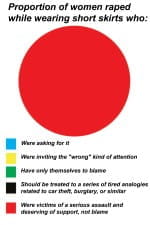
Rape Crisis Scotland has launched a new postcard challenging attitudes to rape.
Please contact info@rapecrisisscotland.org.uk if you would like to receive hard copies of the new postcards.
You can also download pdfs of the front of the postcard here, and of the reverse here.
 RSS
RSSLatest posts
- Parliament to vote on misogyny laws ‘by summer'
- Our reaction to Programme for Government: ‘A tangible crisis needs a tangible response’:
- Reported rape and attempted rape rises by 8% over past year
- New guide and charter of rights for victim-survivors of sexual crime in Scotland
- New chief executive of Rape Crisis Scotland announced