
News


National Stalking Awareness Day 2013
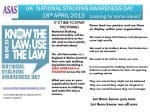
National Stalking Awareness Day 2013 will take place on 18th April.
What can you or your organisation do to raise awareness of stalking and help to make this day a success?
How can we let victims of stalking know that help is available for them, and show perpetrators that their behaviour will not be tolerated?
'It's the difference between having quality of life and not'
Rape Crisis Scotland has published an evaluation of the impact of rape crisis services in Scotland.
In 2012 RCS commissioned an evaluation of support provided by the national helpline and local centres which included an assessment of the extent to which the national helpline and local rape crisis centres provide integrated support to survivors. The evaluation included interviews with local centres and survivors who described the support they received and the difference this made to them. Service users interviewed for the evaluation give a sense of the vital importance of rape crisis services:
‘It’s the difference between having quality of life and not.’
‘It’s been a lifeline – they are always there at the end of the phone. They gave me techniques to use to deal with flashbacks. I will never get rid of that in my mind but I’ve learned to focus on the positive and the things I enjoy.’
‘I can now manage to keep going. I know now that nothing bad is going to come out of it. One weekend I was frantic and really, really low. I texted their mobile and she phoned me and we talked.’
‘If you have years of things happening to you it becomes normal. You become so used to it. But being here helped me understand that it was so wrong. You have to learn to be a person again.’
You can download the full evaluation report here and related literature review here.
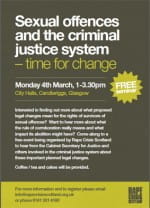
Free seminar on the impact of proposed legal changes on sexual offences

 RSS
RSSLatest posts
- Parliament to vote on misogyny laws ‘by summer'
- Our reaction to Programme for Government: ‘A tangible crisis needs a tangible response’:
- Reported rape and attempted rape rises by 8% over past year
- New guide and charter of rights for victim-survivors of sexual crime in Scotland
- New chief executive of Rape Crisis Scotland announced